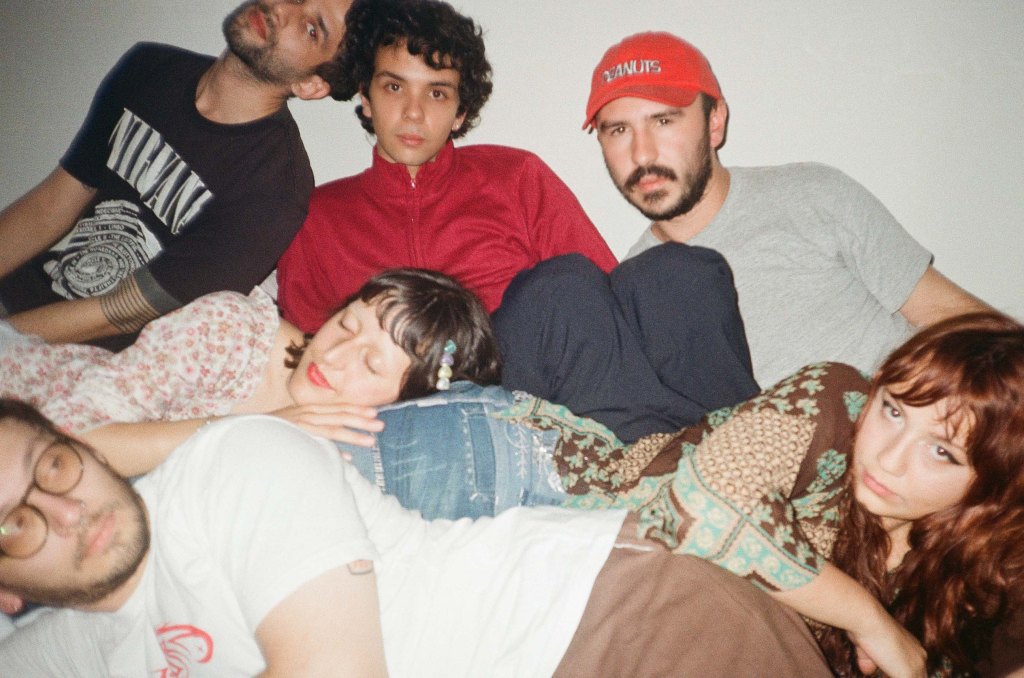
A gente já tinha dito: Juìa é um daqueles grupos que aparecem para mudar o clima da música independente brasileira.
Quando lançaram Dr. Renato Aragão, o single explosivo que antecipou o álbum, nós do Divergent Beats ficamos completamente obcecados — pela energia, pela liberdade, pela mistura impossível que só eles conseguem transformar em poesia elétrica.
Agora, com o lançamento de Dois Trabalhos, o primeiro álbum da banda, essa suspeita vira certeza: estamos diante de um dos projetos mais frescos, ousados e emocionalmente sinceros do cenário alternativo atual.
O disco é um mergulho de 42 minutos onde indie-pop, punk-rock, shoegaze e psicodelia se dissolvem em algo muito próprio — um universo que respira a voz luminosa da Júlia, guitarras que contam histórias, camadas sonoras que soam como um abraço, um desabafo e um portal aberto ao mesmo tempo.
É um álbum revelador, do tipo que chega na hora certa para lembrar que música independente também pode ser grande, cheia de personalidade e absolutamente inesquecível.
E, como você sabe, aqui no Divergent Beats a gente sente as coisas antes de racionalizar.
A verdade é que amamos o disco desde o primeiro segundo, desde o primeiro reverb, desde o primeiro verso atravessado pelo coração. É aquele tipo de música que conversa com os anos 2000, mas também com agora — com a nossa cabeça, nosso caos, nossas pequenas “coisas erradas”.
E foi justamente por amar tanto esse projeto que tivemos o imenso prazer de fazer uma pequena entrevista com a banda, para entender melhor esse universo que eles criaram.
Aqui estão as nossas perguntas — e o começo dessa conversa que a gente espera que nunca termine:
- “Dois Trabalhos” atravessa indie-pop, punk-rock, shoegaze e sintetizadores etéreos, mas tudo parece pertencer ao mesmo universo. Como vocês chegaram a essa identidade tão coesa e, ao mesmo tempo, tão híbrida? Qual foi o ponto de partida estético do álbum?
Juia: Tudo acontece de forma muito casual no que diz respeito aos gêneros das músicas. Quase nunca escolhemos o tipo de música que vamos fazer antes de fazermos, mas as referências que temos nas épocas em que estamos compondo acabam vazando e se misturando no nosso som. Acho que pode ser que o que deixa o som coeso é que nós estamos ali muito presentes como fator comum nessa bagunça, sempre trazendo pras tracks uma honestidade bem pessoal. Não queremos parecer com nada mesmo. Nada além de nós mesmos. Mas o Masayoshi Takanaka, Os Mutantes, o Marcos Valle, a Gal Costa e o Unknown Mortal Orchestra foram gigantes que ouvimos muito nos últimos tempos e definitivamente nos inspiraram nesse processo.
dengocore: Estéticamente, as músicas partem de lugares distintos. Geralmente a primeira ideia que surge é a que dita todo o resto da música. Antes de gravar o que se tornou Dr. Renato Aragão, tinhamos insistido em outra ideia que não funcionou de jeito nenhum, rolou briga e tudo. Praticamente no mesmo momento em que decidimos descartar a ideia original, cansados e frustrados, peguei a guitarra e o riff da Dr. Renato surgiu quase que instantaneamente e, em menos de 15 minutos, Julia já gravava o verso aos gritos. O que havia sido um embate anteriormente, de repente veio fácil e naturalmente. Acredito que os momentos tensos antes da música existir tenham contribuído pra energia pulsante dela. Lua Marinha, em contra-partida, foi uma brisa do começo ao fim. Tudo que foi necessário pra fazer a gravação foram duas latinhas de original, e entre os takes de vocal provavelmente gravamos umas 30 horas de risadas da Julia.
- Qual foi o primeiro momento — aquela fagulha — em que vocês perceberam que esse álbum precisava existir? Houve algo na vida da banda que provocou o nascimento de “Dois Trabalhos”?
Juia e Di: A gente tava com um ep de 5 tracks bem encaminhadinho para lançar no final de 2024, mas sentíamos que estava faltando algo, e que tinha mais que podíamos explorar da sonoridade do projeto antes de lançar. Aí fizemos a Lua Marinha, que não encaixava exatamente com o que tínhamos de pronto e parecia marcar uma nova fase nas nossas composições. Quando fizemos a Festa na Floresta tivemos certeza de que precisaríamos montar um álbum: descartamos 3 das 5 tracks que tínhamos feito pro projeto de ep e passamos a trabalhar em composições novas. A cada música nova que fazíamos depois disso o álbum tomava forma e ia se encaixando, tanto sonora quanto conceitualmente.
- O álbum traz 12 faixas em 42 minutos, todas com letras intensas e guiadas pela vocalidade marcante da Júlia. Como foi o processo de escrita? As músicas nasceram juntas ou cada uma veio de um universo próprio?
Juia: Elas nasceram separadas! Meu processo de escrita se dá mais ou menos da mesma forma desde que comecei a fazer música em 2021. Geralmente o Diogo faz uma base instrumental e a melodia e as letras surgem respectivamente a partir disso. Às vezes eu peço alguma vibe específica pros instrumentais porquê já tenho uma ideia do tipo de sentimento ou imagem que vou conseguir cantar sobre no dia, e outras vezes eu já tenho uma frase ou outra que pensei e achei legal e a gente tenta adaptar pra alguma métrica que fique legal pro instrumental. Tudo é muito natural e bem espontâneo.
- As guitarras têm um protagonismo único no disco — ora cortantes, ora líquidas, ora com texturas quase cinematográficas. Como foi experimentar essas camadas? Houve alguma referência ou decisão técnica que mudou o rumo do álbum?
juia: Isso é coisa do Diogo. Ele é muito guitarrista, acho que toca desde os 9 anos. Conforme íamos fazendo as músicas senti que ele foi ficando mais confiante e ousado, e acho que elas se tornaram mais do que qualquer outro elemento uma voz clara pra ele dentro do projeto. Como se ele cantasse através da guitarra mesmo nas músicas em que não canta.
dengocore: Eu gosto muito de uma guitarra que funcione como uma contra-melodia pro vocal, quase como um dueto. Na gravação do álbum o processo foi botar pra gravar e registrar tudo que fosse surgindo na guitarra. Em algumas músicas, como no fim de tempo de sunga e no fim de goodbye my friends, os solos de guitarra são o primeiro take do jeito que ele veio na cabeça, muita coisa ali podia ser polida e em determinado momento eu tinha a intenção de regravar com mais calma, mas no fim achei legal esse imediatismo de primeiro take de improviso, e foi o que ficou.
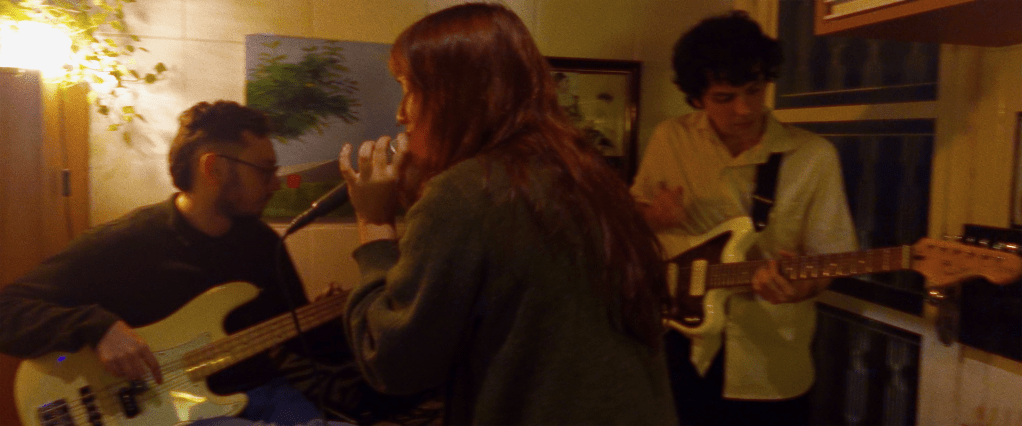
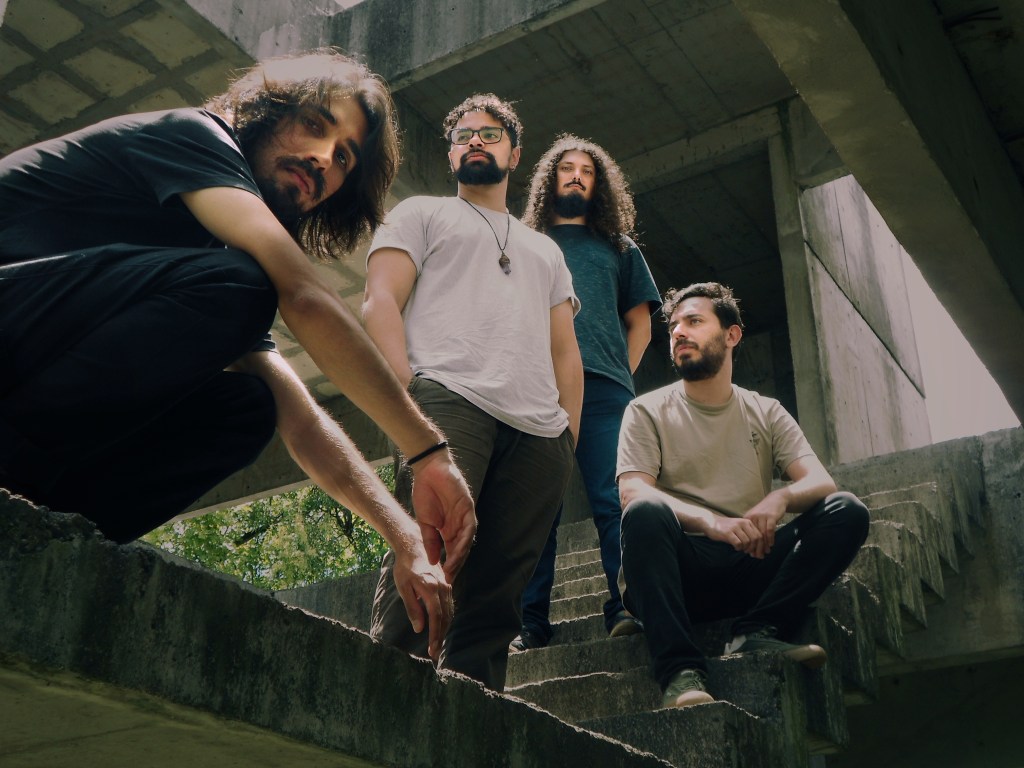
Créditos da foto: Helena Bohn
- O som final de “Dois Trabalhos” parece ao mesmo tempo cru e cuidadosamente lapidado. Como foi o processo de produção? O álbum passou por muitas versões até chegar no que ouvimos hoje?
Ju e Di: Acho que é assim porquê não gravamos demos! A gente geralmente mantém os primeiros takes das gravações que se encaixam na vibe que estamos procurando. Com ruído vazando no vocal e notinhas um pouco fora nos instrumentais mesmo. E aí o Diogo passa meses tentando fazer a bagunça soar bem. Algumas das músicas passaram por algumas versões diferentes, mas a maioria é hoje uma versão ultra cuidada do que era quando nasceu.
- Existe uma sensação de revelação nesse álbum, como se ele dissesse algo que estava faltando na música brasileira recente. Para vocês, qual é o sentimento, a energia ou a mensagem central que “Dois Trabalhos” carrega?
Juia: A única coisa que a gente sabia é que queríamos explorar dentro das nossas capacidades tudo de diferente e bom que conseguimos fazer. Acho que dois trabalhos foi um projeto que se alimentou muito dessa energia gostosa da experimentação casual. O eixo que une tudo é o amor, a amizade e uma sensação de pertencimento a esse mundo engraçado e cruel em que vivemos.
- Esse álbum soa como um novo começo para Juìa. O que vocês enxergam a partir daqui? Turnê, novos visuais, colaborações, expansão sonora… o que podemos esperar do próximo capítulo?
Juia: Pro próximo ano quero muito atualizar o set e tocar essas músicas novas com a banda, gravar mais um clipezinho pro álbum e quem sabe tocar mais algumas vezes fora de Curitiba. Nesse meio tempo vamos continuar fazendo músicas e descobrindo aos poucos como e sobre o quê elas vão ser.
- E para fechar: qual é a mensagem que vocês gostariam de deixar para quem acompanha o Divergent Beats — especialmente esse público que respira música alternativa, independente, emocional e autêntica?
Juia: Mensagem de amor!! Consumir música independente é tão importante quanto fazer. Existe muita gente muito boa e criativa e apaixonada por aí, e na minha opinião é fundamental que o amor pelo som nos una e faça que esses trabalhos cheguem em mais pessoas e lugares.
Ivan Jude Gorini x JUIA
JUÌA IS CHANGING THE GAME: “Dois Trabalhos” Is the Album Shaking Up Brazilian Independent Music
We’ve said it before: Juìa is one of those rare bands that show up to shift the entire atmosphere of Brazilian independent music.
When they released Dr. Renato Aragão — the explosive single that announced the album — we at Divergent Beats became completely obsessed. The energy, the freedom, the impossible mix that only they can turn into electric poetry.
Now, with the release of Dois Trabalhos, the band’s debut album, suspicion becomes certainty: we’re witnessing one of the freshest, boldest and most emotionally honest projects in today’s alternative scene.
The album is a 42-minute dive where indie pop, punk rock, shoegaze and psychedelia melt into something unmistakably theirs — a universe shaped by Júlia’s luminous voice, guitars that feel like storytelling, and sonic layers that sound like a hug, a confession and an open portal all at once.
It’s a revealing album, the kind that arrives at the right moment to remind us that independent music can also be big, full of personality and absolutely unforgettable.
And, as you already know, here at Divergent Beats we feel things before we rationalise them.
The truth is we loved this record from the very first second — from the first reverb, from the first heart-struck verse. It’s the kind of music that speaks to the 2000s but also to right now — to our minds, our chaos, our small “wrong things”.
And because we love this project so deeply, we had the immense pleasure of doing a short interview with the band to understand more about the universe they’ve created.
Here are our questions — and the beginning of a conversation we hope never ends:
“Dois Trabalhos” spans indie-pop, punk rock, shoegaze and ethereal synths, yet everything feels as though it belongs to the same universe. How did you arrive at an identity that’s so cohesive and yet so hybrid? What was the album’s aesthetic starting point?
Juia: Everything happens quite casually when it comes to the genres of the songs. We almost never choose what kind of song we’re going to make before we make it — but whatever references we’re immersed in at the time inevitably spill over and blend into our sound. I think what keeps everything cohesive is simply that we are there as the common factor in the middle of all this chaos, always bringing a very personal honesty to the tracks. We don’t want to sound like anything else. Nothing except ourselves. But Masayoshi Takanaka, Os Mutantes, Marcos Valle, Gal Costa and Unknown Mortal Orchestra were giants we listened to a lot recently, and they definitely inspired us throughout the process.
Dengocore: Aesthetically, the songs start from completely different places. Usually the first idea that appears is the one that dictates everything else. Before recording what became Dr. Renato Aragão, we’d been insisting on another idea that simply didn’t work — we even argued about it. Practically the moment we decided to scrap it, exhausted and frustrated, I picked up the guitar and the riff for Dr. Renato came almost instantly. Less than fifteen minutes later, Julia was already screaming the verse. What had been a struggle moments before suddenly came easily and naturally. I believe those tense moments beforehand fed into the track’s pulsating energy. On the other hand, Lua Marinha was a breeze from start to finish. All we needed to record it were two cans of Original beer, and between vocal takes we probably recorded around 30 hours of Julia laughing.
What was the first moment — that spark — when you realised this album needed to exist? Was there something happening in the band’s life that led to the birth of “Dois Trabalhos”?
Juia & Di: We had a five-track EP pretty much ready to release at the end of 2024, but we felt something was missing, and that there was more we could explore sonically before putting anything out. Then we made Lua Marinha, which didn’t quite fit with what we had and seemed to mark a new phase in our songwriting. When we made Festa na Floresta, we were sure we needed to turn it into an album: we scrapped three of the five EP tracks and started working on new compositions. With each new song, the album took shape and began to fit together, both sonically and conceptually.
The album brings 12 tracks in 42 minutes, all with intense lyrics guided by Júlia’s striking vocal presence. What was the writing process like? Did the songs emerge together, or did each one come from its own universe?
Juia: They came separately! My writing process has been more or less the same since I started making music in 2021. Usually Diogo creates an instrumental base, and the melody and lyrics emerge from that. Sometimes I ask for a specific vibe because I already have a sense of the feeling or imagery I’ll be able to sing about that day; other times I already have a phrase or two that I think are cool and we try to adapt them to a rhythm that suits the instrumental. Everything is very natural and spontaneous.
The guitars take on a unique protagonism — at times sharp, at times liquid, at times almost cinematic. What was it like experimenting with these layers? Was there any reference or technical decision that shifted the direction of the album?
Juia: That’s all Diogo. He’s very much a guitarist — I think he’s been playing since he was nine. As we made the songs, I felt him becoming more confident and daring, and I think the guitars became, more than any other element, a clear voice for him within the project. As if he were singing through the guitar even in the tracks where he doesn’t sing.
Dengocore: I really like a guitar that works as a counter-melody to the vocals, almost like a duet. When recording the album, the process was basically to hit record and capture whatever came out of the guitar. In some songs, like the endings of tempo de sunga and goodbye my friends, the guitar solos are literally the first take — exactly as they came into my head. A lot of it could’ve been polished, and at one point I even intended to re-record them calmly, but in the end I liked the immediacy of that improvised first take, so that’s what stayed.
The final sound of “Dois Trabalhos” feels both raw and carefully refined. What was the production process like? Did the album go through many versions before reaching what we hear today?
Juia & Di: We think it sounds that way because we don’t record demos! We generally keep the first takes if they capture the vibe we’re looking for — vocal bleed, slightly off notes in the instruments and all. Then Diogo spends months trying to make the chaos sound good. Some songs went through a few different versions, but most are essentially a very polished version of what they were when they were born.
There’s a sense of revelation in this album, as if it expresses something that has been missing in recent Brazilian music. For you, what emotion, energy or message sits at the centre of “Dois Trabalhos”?
Juia: The only thing we knew was that we wanted to explore, within our abilities, everything different and good that we’re capable of making. Dois Trabalhos is a project that really fed off the joyful energy of casual experimentation. The axis that holds everything together is love, friendship, and a feeling of belonging in this funny and cruel world we live in.
This album sounds like a new beginning for Juìa. What do you see from here onward? Touring, new visuals, collaborations, sonic expansion… what can we expect from the next chapter?
Juia: Next year I really want to update the set and play these new songs with the band, film another little music video for the album, and maybe play a few more shows outside Curitiba. In the meantime, we’ll keep making music and slowly discovering how and what the next songs will be about.
And to close: what message would you like to leave for those following Divergent Beats — especially listeners who breathe alternative, independent, emotional and authentic music?
juia: A message of love!! Consuming independent music is just as important as making it. There are so many talented, creative and passionate people out there, and in my opinion it’s essential that love for music unites us and helps these works reach more people and more places.




 Divergent Beats
Leave a comment