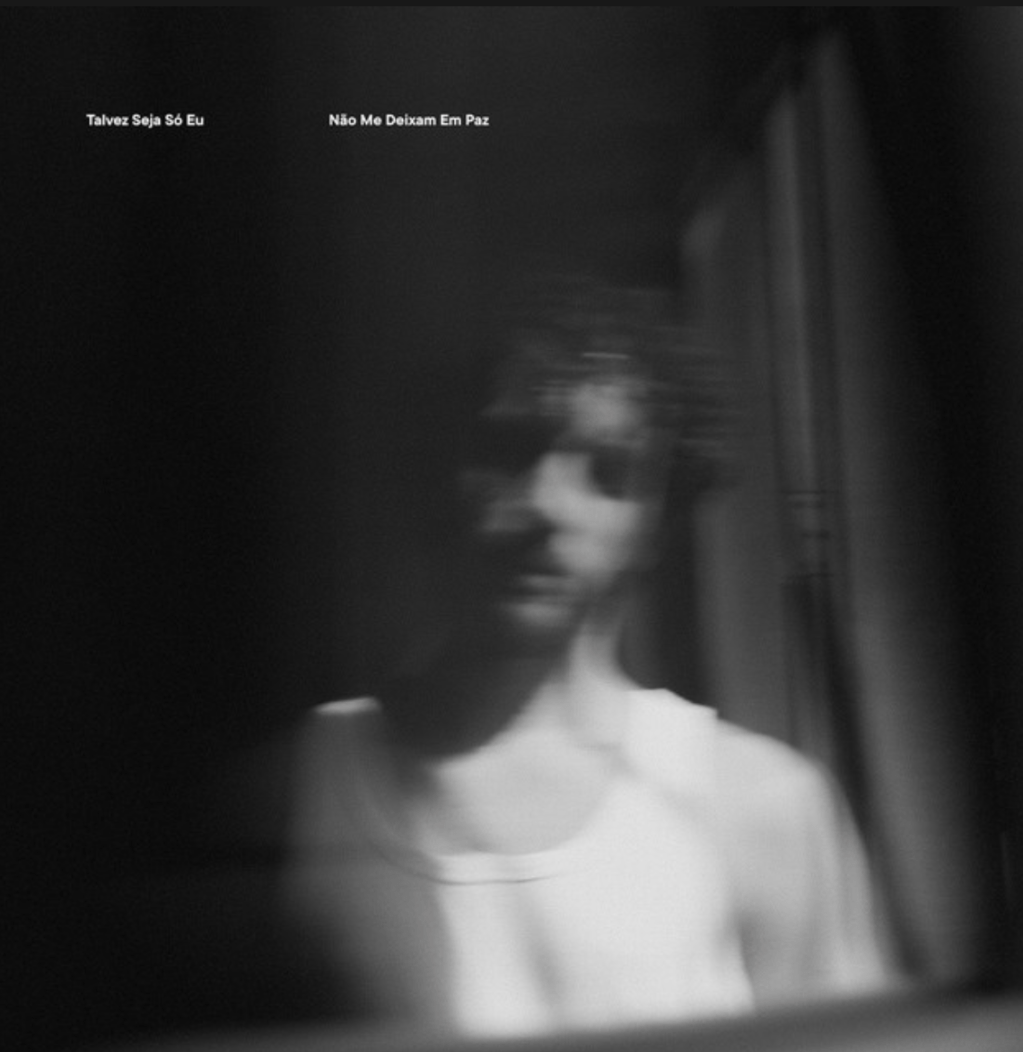
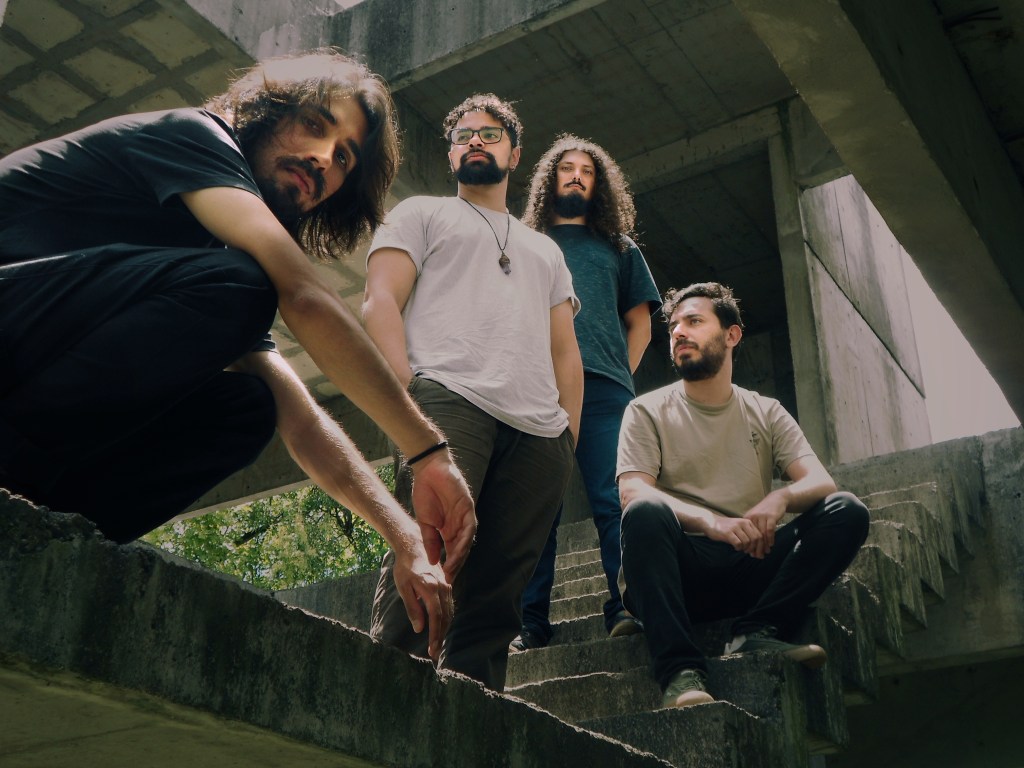
Se você ainda não conhece Talvez Seja Só Eu, está na hora de mergulhar no universo de Bruno Benzaquêm, músico, produtor, psicólogo e psicopedagogo, que transforma experiências de vida em música com uma sensibilidade rara. Com o álbum Não Me Deixam em Paz, Bruno e sua banda — André Luiz Rosa, André Urso Santos, Felipe Musa e João Carstens — entregam um trabalho que mistura rock, samba e jazz, unindo histórias de vida, amizade e cotidiano com uma honestidade que toca qualquer ouvinte.
O álbum consegue equilibrar assuntos que muitos de nós enfrentamos diariamente, colocando-os em uma narrativa musical leve, mas potente. A voz de Bruno, tão genuína quanto envolvente, se destaca em cada faixa, acompanhada de arranjos que revelam cuidado, técnica e sensibilidade. O resultado é um projeto musical que nos faz refletir, se identificar e se emocionar, tudo ao mesmo tempo. E, claro, jogar em casa — com Bruno vindo do Rio de Janeiro — só torna a experiência ainda mais próxima do nosso olhar Divergent Beats.
Tivemos o grande prazer de entrevistá-lo, e esta é a entrevista completa para todos vocês:
No início da faixa-título Não Me Deixam em Paz, você diz: “Obrigado por me escutar e não se ofender, eu tinha mania de não pensar em que vou dizer.” Como essa frase reflete seu processo de criação e a vulnerabilidade que você quis transmitir no álbum?
Bruno: Interessante essa pergunta. Essa foi a última música que trabalhamos, apesar deu ter consciência de que queria uma faixa de abertura, não sabia muito bem como ela seria. Eu tinha uma lista com várias frases para usarmos nessa música, eu acho que escolhi essa por ser um sentimento que todos nós passamos, hora ou outra (eu e meus amigos principalmente).
É muito legal poder estar vulnerável com pessoas que fazem você se sentir seguro, acho que para abrir o álbum tinha que ser essa frase mesmo. São histórias sobre minhas amizades, minha família, coisas que passei sozinho e com essas pessoas também. Hoje em dia eu olho para composição como algo mais metódico e com mais atenção, mas como é algo que fazemos aqui entre amigos desde pequenos, sabemos hoje que tem um lado de não se levar tão a sério, não se ofender com qualquer coisa, às vezes é bom ter um espaço onde você pode falar sem pensar muito.
O álbum mistura rock, samba e jazz, criando uma sonoridade leve mas com letras profundas. Como foi o desafio de equilibrar musicalidade e mensagem emocional sem perder autenticidade?
Bruno: Eu acho que a autenticidade vem de assumir as influências mesmo. Não nos propomos a criar nada que fosse “inovador” ou uma grande “novidade”. Eu, André, Urso, Felipe, João e todo mundo que tocou com a gente nesse álbum temos nossas referências muito claras. Eu acho engraçado que hoje em dia todo mundo quer de uma forma egocêntrica pensar que reinventou alguma coisa, é a história dos cegos e do elefante, sabe? Cada um pega um pouquinho e percebe algo diferente. O legal de trazer essas letras, com essa produção sonora, é que ela fica mais leve, mais palatável. Uma amiga nossa disse que o álbum é como se alguém estivesse comicamente angustiado, e sendo que nos baseamos muito na nossa amizade, é um bom sentimento para se sentir com amigos, não acha?
As letras são muito minha culpa. Eu gosto de absorver tudo que estamos passando, até porque não tenho pretensão nenhuma de escrever sobre mim, mas sobre a gente. E até por isso que o projeto tem esse nome, para que a gente pense “nossa será que sou só eu que passo por isso?” Brincando com a ideia (na época das primeiras músicas) de ter gravado tudo sozinho, ou talvez não…
Durante sua trajetória, você gravou sozinho algumas músicas, tocando todos os instrumentos, e agora trabalha com a banda completa. De que forma essa evolução influenciou a sonoridade e a abordagem do álbum Não Me Deixam em Paz?
Bruno: Sabe o que é engraçado? Todos nós tocamos juntos há mais de dez anos, e tivemos intercalados projetos diferentes. A Coisa Toda, Dobalacobaile, R.U.M são algumas das bandas, cada uma com uma identidade diferente. E sempre que começo a trabalhar na pré-produção, mesmo que eu vá tocar os instrumentos quase que todos, eu imagino todos nós tocando juntos. O som que eu imagino, é o deles.
No primeiro álbum, por conta da pandemia, o único que tocou alguma coisa além de mim foi o Urso em “Crianças Sabem” – até por que aqueles solos que ele faz, eu jamais conseguiria fazer. Hoje, nós tocando juntos, transformamos as músicas numa característica coletiva muito mais interessante. A bateria que eu tinha pensado para “Amor Que Foi Cedo” era completamente diferente da que o André pensou, se não fosse o João no piano em “Tudo O Que Falta Aqui” a música talvez tivesse uma outra cara, a voz da Helena ao longo das músicas então, nem se fala, é uma outra personagem. Eu não fico micro-gerenciando a produção até porque eu quero que seja uma interpretação coletiva. Hoje em dia todo mundo é artista e quase ninguém é coletivo, banda, isso é muito legal.
Muitas das letras do álbum parecem conversar com sentimentos cotidianos que muitos ouvintes compartilham hoje. Como você escolhe os temas e palavras que aparecem nas suas músicas? Há algo que você espera que o público leve dessas mensagens?
Bruno: Legal. Sabe, eu já contei, mas é por isso que o nome da banda é esse. Os temas são o que estou vivendo hoje em dia, ou pelo menos há pouco tempo atrás. Olha, não tem uma escolha consciente dos temas não, viu. Gosto de pensar que as músicas são como o Bob Dylan falava, elas estão em algum lugar, como pescar você tem que ficar ali atento esperando o anzol ser mordido.
Tenho desenvolvido cada vez mais o hábito da composição, quando mais novo eram notas no meu celular e gravações rápidas que em algum momento eu resolvia. Por exemplo, teve uma época que conciliar estudos e diversos trabalhos, a composição ficava em segundo plano. Hoje tenho valorizado mais o momento de estar inteiro nesse processo, tirar uma horinha mais ou menos para isso e vomitar tudo o que sai sobre aquela peça. As palavras, termos, vem tanto de coisas que falamos de vez em quando entre nós, quanto de livros, séries, filmes e de outras músicas.
Nós ouvimos uma música às vezes e pensamos “podemos fazer algo tipo assim” e acho isso muito legal, é uma troca né? Tem uma agora que tenho trabalhado para outro álbum mais pra frente, que veio da conversa que tive com um motorista de ônibus quando voltava de Niterói. Ele falou algo tão interessante que pensei, nossa isso da um personagem legal para uma música.
A banda é formada por amigos de longa data com diferentes experiências profissionais, de educação a engenharia e design. Como a diversidade de experiências do grupo influencia o processo criativo e o resultado final do álbum?
Bruno: De uma forma muito engraçada, sabe? Eu venho da educação, trabalhei anos em escolas e o Urso por exemplo engenheiro. Ele encara a gravação de uma forma muito mais metódica do que eu, dá pra ver o cérebro dele elaborando a faixa como um processo mecânico, encaixando as frases da guitarra e o solo. Outro exemplo é a Helena, é uma baita designer, faz coisas muito interessantes, e tem uma interpretação e imaginação da música mais visual, de verdade. Ela do nada traz elementos geniais para colocar na música, sem uma “explicação musical teórica” mas por meio de uma imagem visual.
No final das contas mesmo, tudo isso é muito inconsciente e não pensado. Nós chegamos no estúdio com as ideias, vamos tocando, abrimos uma cerveja e somos nós mesmos. O que eu acho mais legal é que isso nos coloca num lugar de valorizar o que estamos fazendo pelo momento, não somente pela obra sabe?
Pra você ver isso acontecendo no álbum, em Pq Vc Odeia Tanto Assim, temos duas baterias ao mesmo tempo, a do Felipe e a do André, cada um vem de uma história e formação diferente, não opostos, mas complementares.
Produzir e lançar um álbum que trata de amizade, vida e experiências pessoais exige coragem e autenticidade. Como você lida com a responsabilidade de colocar essas histórias tão próximas da sua vida e da de outros para o público?
Bruno: Acho que em primeiro lugar, mantendo uma distância saudável das redes sociais. Nós todos, eu acredito aqui na Talvez não somos de consumir muito, claro ver vídeos engraçados e mandar um pro outro faz parte, mas não somos crônicos online. Agora estou mais por conta do lançamento, mas assim que esse momento passar, vou dar uma saída.
Também, além da terapia em dia, nós criamos eu-líricos para isso, né? Essas letras em algum lugar já deixaram de ser personagens reais, para se tornarem imaginários. Espera Por Mim, por exemplo não fala muito diretamente de nós. Claro, comecei ela num momento em que estava enfurnado de trabalho, tem sempre um evento ou outro que converge com a vida real, mas ela de fato não aconteceu com a gente.
O pessoal da banda com certeza faz as ligações com as letras e o que conversamos e vivemos juntos, mas para todo o resto é só uma fração do nosso pequeno universo. Acho que é reconfortante, em certo sentido, pensar que todo mundo é um tanto autocentrado e ninguém tá pensando em mim.
Se você pudesse descrever em poucas palavras a evolução artística que Não Me Deixam em Paz representa para você, qual seria? E como esse álbum dialoga com o seu passado e projetos anteriores?
Bruno: Honestidade. Acho que são músicas mais honestas, que ainda não é cem por cento independente do que os outros pensam, mas já é um grande passo. Para mim são uma série de músicas que fizemos de forma honesta com nós mesmos.
Eu não sei sobre “dialogar”, mas com certeza ele tem uma grande base nas bandas antigas que tivemos juntos, não tem muito como fugir disso. Toda música é uma espécie de catarse, como se um ciclo mostrasse o porquê dele existir.
Qual mensagem você gostaria de deixar para os leitores e ouvintes do Divergent Beats sobre este álbum e sobre sua música em geral?
Bruno: Eu espero que eles curtam as músicas. Se aprenderem mais sobre si ou sobre suas relações com ela, incrível! Se só quiserem dançar ou ouví-las enquanto andam de bicicleta, melhor ainda! E talvez o mais importante, busquem seus amigos e façam coisas juntos. Saber se amar e tudo mais é importante, mas não deixem que o ego inchado das redes sociais nos faça perder a graça de criar as coisas juntos. Amor próprio só funciona se ele existe em comparação com o amor alheio, se não não significa nada.
Meus alunos pequenos de música estão pouquíssimo inclinados a formar banda, ou até mesmo duplas para tocar junto, é aprender uma música para só postar ou tocar uma vez e esquecer, isso é um saco. O legal de fazer música em grupo é que não é uma competição e nem uma autopromoção à lá LinkedIn.
Nós todos começamos tocando com os amigos da escola, no pátio, na garagem, no quarto todo mundo junto, fomos vivendo nossas vidas de formas diferentes, mas juntos e aqui estamos. Isso é muito bom. Estar junto.
Nós de Divergent Beats ficamos completamente encantados com Não Me Deixam em Paz. O álbum é, sem exagero, uma obra que equilibra sentimentos profundos, histórias do cotidiano e um refinamento musical impressionante. A forma como Bruno organiza cada música, cada letra e cada melodia é simplesmente maravilhosa — uma verdadeira prova de que talento, sensibilidade e autenticidade podem coexistir em um só projeto. É daquelas obras que a gente escuta várias vezes e ainda descobre novas camadas a cada audição.
Ivan Jude Gorini x Talvez Seja Só Eu
Talvez Seja Só Eu: A Musical Journey Through Emotions and Real Life
If you haven’t yet discovered Talvez Seja Só Eu, it’s time to dive into the universe of Bruno Benzaquêm, musician, producer, psychologist and psychopedagogue, who transforms life experiences into music with rare sensitivity. With the album Não Me Deixam em Paz, Bruno and his band — André Luiz Rosa, André Urso Santos, Felipe Musa and João Carstens — deliver a work that blends rock, samba and jazz, weaving stories of life, friendship and everyday reality with honesty that resonates deeply.
The album strikes a perfect balance between issues many of us face daily and a musical narrative that is both light and powerful. Bruno’s voice, genuine and captivating, stands out on every track, complemented by arrangements full of care, technique and sensitivity. The result is a musical experience that makes you reflect, relate and feel — all at once. And, of course, with Bruno hailing from Rio de Janeiro, there’s an extra layer of homegrown familiarity that makes the experience even more intimate for Divergent Beats readers.
We had the great pleasure of interviewing him, and here is the full interview for all of you:
At the beginning of the title track Não Me Deixam em Paz, you say: “Obrigado por me escutar e não se ofender, eu tinha mania de não pensar em que vou dizer.” How does that line reflect your creative process and the vulnerability you wanted to convey on the album?
Bruno:That’s an interesting question. It was actually the last song we worked on. Even though I already knew I wanted an opening track, I didn’t really know what it would sound like. I had a list of several lines we could use in that song, and I think I chose this one because it expresses something we all feel at one point or another (especially my friends and I).
It’s really nice to be vulnerable around people who make you feel safe, and I felt that if the album was going to open with anything, it had to be that line. These songs are stories about my friendships, my family, things I went through alone and things I went through with them as well. These days, I look at songwriting in a more methodical and attentive way, but because it’s something we’ve done together since we were kids, there’s still this side of not taking ourselves too seriously, not getting offended by every little thing. Sometimes it’s good to have a space where you can just speak without overthinking.
The album blends rock, samba and jazz, creating a light sound yet with deep lyrics. What was it like trying to balance musicality and emotional message without losing authenticity?
Bruno: I think authenticity comes from embracing your influences. We never set out to create something “ground-breaking” or a big “innovation”. André, Urso, Felipe, João and everyone who played with us on the album — our influences are very clear. I find it funny how nowadays everyone wants, in this slightly egocentric way, to think they’ve reinvented something. It’s like the story of the blind men and the elephant, you know? Everyone grasps a small piece and sees something different.
What’s nice about bringing these lyrics into this sonic production is that it makes everything lighter, more digestible. A friend of ours said the album sounds like someone being comically distressed — and since so much of it is based on our friendship, that’s quite a good feeling to share with your mates, don’t you think?
The lyrics are very much my fault. I like absorbing everything we’re going through, mostly because I have no intention of writing about me, but about us. And that’s also why the project has this name — so that we ask ourselves, “Is it just me who feels like this?” It plays with the idea (back when the first songs were being written) that maybe I recorded everything on my own… or maybe not.
Throughout your journey, you recorded some songs entirely by yourself, playing all the instruments, and now you work with the full band. How has this evolution shaped the sound and approach of Não Me Deixam em Paz?
Bruno: You know what’s funny? We’ve all been playing together for over ten years, with different projects in between. A Coisa Toda, Dobalacobaile, R.U.M — each one had a different identity. And whenever I start working on pre-production, even if I’m going to record most of the instruments myself, I always imagine all of us playing together. The sound I picture is their sound.
On the first album, because of the pandemic, the only person who played anything other than me was Urso on “Crianças Sabem” — those solos he does, I could never pull them off. Today, playing together, we transform the songs into something collectively far more interesting. The drum part I had in mind for “Amor Que Foi Cedo” was completely different from what André came up with; and if João weren’t on the piano in “Tudo O Que Falta Aqui”, the song would probably feel entirely different. And Helena’s vocals throughout the album — honestly, it’s like adding another character altogether.
I don’t micro-manage the production because I want it to be a collective interpretation. These days everyone is an artist, but hardly anyone is part of a collective, a band — and that’s something I find really cool.
Many of the album’s lyrics speak to everyday feelings that a lot of listeners relate to today. How do you choose the themes and words that appear in your songs? Is there something you hope the audience takes from them?
Bruno: Nice. As I’ve said before, that’s why the band is named what it is. The themes come from what I’m living through at the moment, or at least recently. There isn’t a conscious choice of themes, really. I like to think songs are like Bob Dylan used to say — they’re somewhere out there, and like fishing, you just have to wait patiently for the hook to be bitten.
I’ve been developing the habit of writing more consistently. When I was younger, it was notes on my phone and quick recordings that I’d get back to eventually. There was a time when juggling studying and several jobs made songwriting a secondary thing. Now I value taking that moment to be fully present in the process — setting aside an hour or so and pouring out everything that comes.
The words and expressions come from things we say among ourselves, as well as from books, series, films and other songs. Sometimes we listen to something and think, “We could do something in that vein,” and I love that — it’s an exchange, isn’t it? There’s a new one I’m working on for a future album that came from a conversation I had with a bus driver when coming back from Niterói. He said something so interesting I thought, “That would make a great character for a song.”
The band is formed by long-time friends with different professional backgrounds, from education to engineering and design. How does this diversity influence the creative process and the final result of the album?
Bruno: In quite a funny way, actually. I come from education — I worked for years in schools — and Urso, for example, is an engineer. He approaches recording in a much more methodical way than I do; you can practically see his brain constructing the track as a mechanical process, fitting in the guitar lines and solos. Then there’s Helena — she’s an incredible designer, does really interesting stuff, and her interpretation of music is much more visual. She’ll suddenly come up with brilliant elements to add to a song, not through “musical theory”, but through a visual image she has.
In the end, all of this is very unconscious and unplanned. We show up at the studio with ideas, start playing, open a beer and just are ourselves. The nicest thing is how it makes us value the moment of creating, not just the finished work, you know?
If you want to hear that happening on the album, in “Pq Vc Odeia Tanto Assim” we have two drum kits at the same time — Felipe’s and André’s. Each comes from a different background, not opposites, but complementary.
Producing and releasing an album about friendship, life and personal experiences requires courage and authenticity. How do you handle the responsibility of sharing stories so close to your life — and others’ — with the public?
Bruno: I think first of all by keeping a healthy distance from social media. All of us — at least here in the band — aren’t big consumers of it. Of course we watch the occasional funny video and send it to each other, but we’re not chronically online. Right now I’m on it a bit more because of the album release, but once this moment passes, I’ll take a step back again.
Also, besides keeping therapy up to date, we create lyrical personas for these things, right? These lyrics, at some point, stop being real people and become imaginary ones. Espera Por Mim, for example, doesn’t speak directly about us. Sure, I started writing it during a period when I was buried in work, and there are always small events that converge with real life — but the story itself didn’t happen to us.
The band members definitely connect the lyrics with things we’ve lived and talked about together, but for everyone else it’s just a small fraction of our little universe. It’s comforting, in a sense, to remember that everyone is somewhat self-centred — no one is really thinking about me.
If you could describe in a few words the artistic evolution that Não Me Deixam em Paz represents for you, what would it be? And how does this album relate to your past and previous projects?
Bruno: Honesty. I think these songs are more honest — not yet a hundred per cent free from what others might think, but already a big step forward. For me, they’re songs we created in a way that felt truthful to ourselves.
I don’t know about “dialogue”, but it certainly has a strong foundation in the old bands we played in together — there’s no escaping that. Every song is a kind of catharsis, as if each cycle explains why it exists.
What message would you like to leave for Divergent Beats readers and listeners about this album and about your music in general?
Bruno: I hope they enjoy the songs. If they learn something about themselves or their relationships from them, amazing! If they just want to dance or listen while cycling, even better! And perhaps most importantly: go find your friends and make things together. Learning to love yourself is important, of course, but don’t let the inflated egos of social media make us forget the joy of creating together. Self-love only works if it exists alongside loving others; otherwise it doesn’t mean anything.
My young music students today are barely inclined to form bands, or even duos. They learn a song only to post it or play it once and then forget it — it’s exhausting. The great thing about making music in a group is that it’s neither a competition nor a LinkedIn-style self-promotion exercise.
We all started playing with school friends, in the courtyard, the garage, the bedroom — everyone together. We lived our lives in different ways, but together, and here we are. And that’s wonderful. Being together.
We at Divergent Beats were utterly captivated by Não Me Deixam em Paz. The album is, without exaggeration, a work that balances deep emotions, everyday stories, and an impressive musical refinement. The way Bruno structures each song, each lyric, and each melody is simply wonderful — a true testament to how talent, sensitivity, and authenticity can coexist within a single project. It’s one of those works you can listen to several times and still discover new layers with every play.




 Divergent Beats
Leave a comment